The Lord Who Remains When Everybody Else Has Left
Fearing a Compassionate God Who Stays When Everybody Else Has Grown Tired
Human relationships, at their absolute best, are beautiful gifts. We are wired for connection, designed to carry one another’s burdens, and called to stand together in the storms of life. Yet, there is an unspoken, uncomfortable reality that every human being must eventually confront: human presence is a finite resource. Even the deepest love has a breaking point; the strongest shoulders tire, the most resilient minds exhaust their capacity, and eventually, the crowd disperses.
When a crisis outlasts the calendar, people leave. They do not always leave out of malice or cruelty, but simply because they are human, and humanity is bound by limitations of time, emotional energy, and resources.
But there is a profound, holy awe—a reverent fear—in recognizing that when the human boundary is reached, the divine presence is just beginning. To fear a compassionate God is to stand in breathless wonder of a Creator whose endurance does not wane when our stories become too heavy, too complicated, or too long for the world to watch. He is the Lord who remains when everybody else has left.
The Shadows of Long-Term Suffering
There is a distinct type of loneliness reserved for the protracted battle of chronic illness. In the initial weeks of a medical crisis, the hospital room is filled with flowers, cards, and a revolving door of well-wishers. Prayers are fervent, phone calls are frequent, and the collective hope of a community surrounds the patient like a shield.
However, when months bleed into years, the scenery changes. The flowers wither and are not replaced. The text messages dwindle from daily check-ins to sporadic inquiries until they finally cease altogether. The sick person is left in a quiet room, listening to the ticking of a clock and watching the world move onward through a window. Friends lose hope; they run out of encouraging words because the diagnosis refuses to bend to their optimism.
A similar, perhaps even heavier, isolation envelops those wrestling with the beast of drug addiction. Addiction is a thief that steals a person in slow motion. In the beginning, families rally. They stage interventions, exhaust their savings on rehabilitation centers, and offer endless second chances. But addiction tears at the fabric of relational trust until the threads snap. Eventually, a point arrives when the family hits a wall of utter despair. To protect their own sanity, or out of sheer exhaustion, they step back. The phone stops ringing. The doors are locked. The individual is left entirely alone in the dark, abandoned to their vices because everyone else has lost hope.
It is precisely in these spaces of absolute abandonment—where medicine has failed, friends have vanished, and families have surrendered to despair—that the unwearied God steps into the room. He does not require a patient to get better to merit His presence, nor does He turn away from the addict because the road to recovery is messy. When human hope reaches its expiration date, His relentless compassion remains.
The Silence After the Farewell
Perhaps nowhere are the limits of human comfort more vividly displayed than in the wake of bereavement. The ritual of grief is initially a communal event. When death strikes a home, the house is instantly flooded with extended relatives, neighbors, and colleagues. Food is brought in abundance, hands are held, and the air is filled with shared memories and tears.
Then comes the funeral. The final prayers are spoken, the body is lowered into the earth, and the gathering slowly scatters.
By the next evening, the reality changes entirely. The cars drive away. The relatives catch buses and flights back to their respective routines. The leftover food sits in the refrigerator, and the house falls into an agonizing, echoing silence. The bereaved family is left alone with a grief that feels heavier than the fresh soil upon the grave. The world expects them to heal—or at least to learn to cope—because the world must return to its own business.
Consider, too, the compounded grief of a family that fought valiantly for the life of a sick loved one. They prayed until their voices were hoarse, spent every cent they possessed on treatments, and endured sleepless nights beside a hospital bed—only for the monitor to go flat. They are left not only with an empty chair at the table but also with the haunting echoes of a battle lost despite their absolute best efforts. The double weight of physical exhaustion and spiritual confusion isolates them from a world that prefers quick transitions and happy endings.
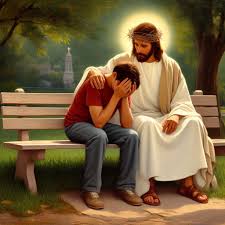
When the funeral crowd leaves, however, the Holy Spirit does not depart. He stays in the quiet living room. He sits on the edge of the empty bed. The God who numbers our tears remains to guide us through the long, dark winter of grief when everyone else has become too tired to sit in the sorrow.
The Solitary Weight of Unseen Struggles
There is a quiet, eroding despair that comes from trying your hardest and still falling short. We see this in the life of a dedicated husband, wife, or parent who wakes up early, works late, sacrifices every personal luxury, and yet remains trapped in poverty. They do everything right according to society’s expectations, yet poverty keeps its knee on their neck.
This type of financial and structural hardship creates profound social isolation. Poverty silences people. The struggling provider withdraws from social circles out of shame, unable to keep up with the lifestyles of their peers. Friends notice the withdrawal and eventually stop extending invitations. The struggle becomes a form of solitary confinement in which the provider carries the crushing weight of their family’s survival entirely alone, feeling like a ghost in their own life.
Scriptural Testimonies: The God of the Residue
The pages of Scripture consistently reveal that God does some of His most profound work when human support systems completely collapse.
The Man at the Pool of Bethesda (John 5): For thirty-eight long years, a lame man lay by the pool, hoping for a miracle. In nearly four decades, he had watched thousands of people receive help into the water ahead of him. When Jesus approached him and asked if he wanted to be healed, the man's response was a heartbreaking cry of absolute isolation: “Sir, I have no one to help me into the pool when the water is stirred.” He was surrounded by a crowd, yet completely alone; everyone else was consumed by their own pursuits. Jesus did not wait for someone else to help him. The Lord stood beside him in his friendless state and commanded him to walk.
The Apostle Paul’s Final Days (2 Timothy 4:16–17): Facing execution in a cold Roman dungeon, the great apostle experienced the bitter sting of abandonment. He wrote to Timothy, “At my first defense, no one came to my support, but everyone deserted me.” Yet the very next verse shifts from despair to triumphant awe: “But the Lord stood at my side and gave me strength.” When his closest companions fled to save their own lives, the King of Kings remained beside His servant.
An Anchor of Hope
To fear this compassionate God is to reverence a love that is fundamentally different from anything found in human nature. Human love is a candle; it can provide warmth, but it eventually burns down to the wick. Divine compassion is an uncreated sun.
As author and editor Charles Obiye profoundly notes regarding this enduring grace:
"Human love has a horizon, a point where capacity ends and exhaustion takes over. But divine compassion has no sunset; when the room empties and the silence settles, the Lord does not slip out the back door—He moves closer."
If you find yourself today in the quiet room where the sickbed has outlasted your friends’ patience; if you are sitting in a silent house after a funeral where the crowd has moved on; if you are fighting an addiction or a financial burden that has caused others to wash their hands of you—take heart.
You are not empty-handed. The fading of human presence is often the canvas upon which the permanent presence of God is most clearly painted. Turn your eyes away from the locked doors and the silent phones, and direct your heart to the One who promised, “I will never leave you nor forsake you.” He is there, He is invested, and He is not tired.
Charles Obiye
Email: obiyecharles@gmail.com
Phone: +254 716 669 887