TRUTH IN A NOISY WORLD: A CALL TO ADVENTIST PASTORS IN THE AGE OF MISINFORMATION
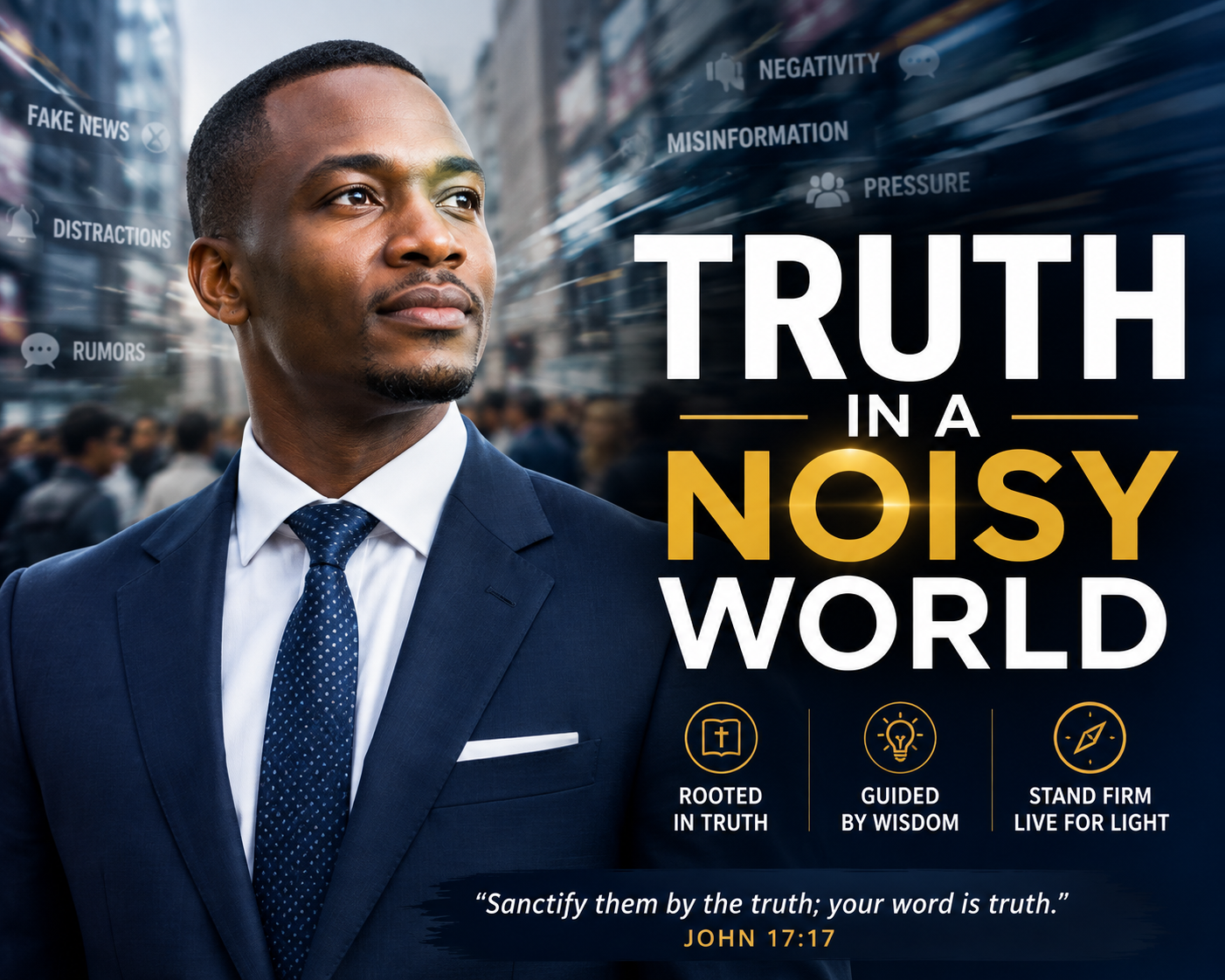
We are living in a time when information travels faster than wisdom.
A WhatsApp message can reach hundreds of people before anyone has asked whether it is true. A short video can be taken out of context. A photograph can be manipulated. A quotation can be falsely attributed to a respected leader. And a rumour, repeated often enough, can begin to sound like fact.
For Adventist pastors, this is more than a communication challenge. It is a spiritual and pastoral responsibility.
The pastor is not simply a preacher standing behind a pulpit. He or she is a shepherd, teacher, counsellor and trusted voice. When a pastor shares information, people often assume that it has been verified.
That trust must never be taken lightly. Not Everything We Receive Is True
One of the great challenges of the digital age is learning to distinguish information from truth.
Not everything that is trending is true.
Not everything that sounds convincing is factual. Not everything shared by a friend deserves to be forwarded.
The Bible calls God's people to exercise discernment. The Bereans were commended because they listened to Paul's teaching and then searched the Scriptures to determine whether what they heard was true (Acts 17:11).
Paul's counsel remains relevant: “Prove all things; hold fast that which is good.” 1 Thessalonians 5:21
Discernment is not a lack of faith. It is evidence of mature faith.
The Pastor Must Learn to Pause. Perhaps one of the most important pastoral disciplines today is simply this: Pause before you share.
When a message arrives saying, “URGENT! Share this with everyone,” the pastor should resist the pressure to become another link in the chain.
Ask:
Who is the original source?
Is there evidence?
Can the claim be independently verified?
Is the information current?
Has the statement been taken out of context?
Will sharing this help people, or merely create fear and confusion?
Who is the original source?
Is there evidence?
Can the claim be independently verified?
Is the information current?
Has the statement been taken out of context?
Will sharing this help people, or merely create fear and confusion?
Sometimes the wisest pastoral response is, “I have received this information, but I cannot verify it yet.” There is no weakness in saying, “I don't know.” There is great integrity in doing so. Be Careful With the Pulpit
A rumour shared privately may influence a few people. A rumour preached from the pulpit can influence an entire congregation.
This is why pastors must be especially careful when discussing politics, public figures, church leaders, health matters, alleged scandals, prophecy and controversial social issues.
The pulpit should never become a platform for speculation. Our members deserve better than rumours wrapped in religious language. The pastor's calling is not to make every issue exciting. It is to make God's truth clear.
Handle Scripture With Care
Misinformation can also enter the church through the misuse of Scripture. A Bible verse can be genuine while the interpretation placed upon it is completely wrong.
We can quote Scripture out of context. We can use a verse to support a personal opinion. We can turn speculation into prophecy and preference into doctrine.
The responsibility of the preacher is therefore not to make Scripture agree with us. Our responsibility is to make ourselves agree with Scripture.
The question should always be:
“What is God saying through this passage?”
rather than:
“How can I use this passage to prove my point?”
The Digital Pastor
Today's pastor has another pulpit. It is called social media. Our WhatsApp status, Facebook posts, videos, podcasts and forwarded messages can reach people we may never meet personally. That means our digital behaviour is part of our Christian witness.
Artificial intelligence has made this challenge even greater. Images, voices and written material can now be created or altered with remarkable realism. Therefore, pastors must develop digital discernment.
A convincing image is not necessarily an authentic image. A confident voice is not necessarily the voice of the person being portrayed. A beautifully written article is not necessarily accurate. Technology can assist ministry, but technology does not replace discernment.
Integrity Includes Saying, “I Was Wrong”
Perhaps the most powerful example a pastor can give is the courage to correct a mistake.
If you shared something that later proves false, correct it.
If you misquoted someone, acknowledge it.
If you misunderstood a biblical passage, revisit it.
If you discover that a statement you preached was inaccurate, clarify it.
There is no disgrace in making an honest mistake. The real danger is defending an error simply because we are afraid to admit it.
A congregation does not need a pastor who pretends to know everything. It needs a pastor who demonstrates honesty. “I was wrong” can sometimes be one of the most powerful sermons a pastor ever preaches.
Truth and Love Must Walk Together
Truth matters, but the way we communicate truth also matters. Paul tells us to speak “the truth in love” (Ephesians 4:15).
This means we do not correct people with arrogance. We do not humiliate those who have believed false information. We do not turn every disagreement into a spiritual battle. Instead, we teach, correct, listen and patiently guide. The goal is not to win arguments. The goal is to help people discover truth.
A Simple Challenge for Every Pastor
Before forwarding, posting, preaching or repeating something, pause and ask:
Is it true?
Is it necessary?
Is it helpful?
Is it properly sourced?
Is it consistent with Scripture?
Would I be comfortable defending this statement publicly if challenged?
If the answer is uncertain, wait.
Remember, not every message needs to be shared. Not every controversy needs a pastoral comment. Not every rumour deserves a pulpit. Sometimes silence is not cowardice. Sometimes silence is wisdom.
A Final Appeal
Dear Adventist pastor, the world is already full of noise. Our members do not need another voice competing for attention. They need a voice they can trust. They need pastors who will verify before amplifying, investigate before concluding, listen before judging and correct themselves when necessary.
They need shepherds who will not allow political loyalty, social-media pressure or personal opinion to become more important than truth.
The Adventist Church has a powerful message to proclaim. But the credibility of that message is strengthened when those who proclaim it demonstrate integrity in every area of life, including the digital world.
So us guard our pulpits.
Let us guard our platforms.
Let us guard our words.
Let us guard our sources.
And above all, let us guard the truth.
The world does not need louder pastors. It needs trustworthy pastors. And in an age of misinformation, that may be one of the greatest ministries we can offer.
“Buy the truth, and sell it not.” Proverbs 23:23
Pastor Naftal Ondiba Masoka
Chaplain Tombe Girls High School